
Ireland blink last
How did Ireland lose a game they should have won against the Black Ferns?

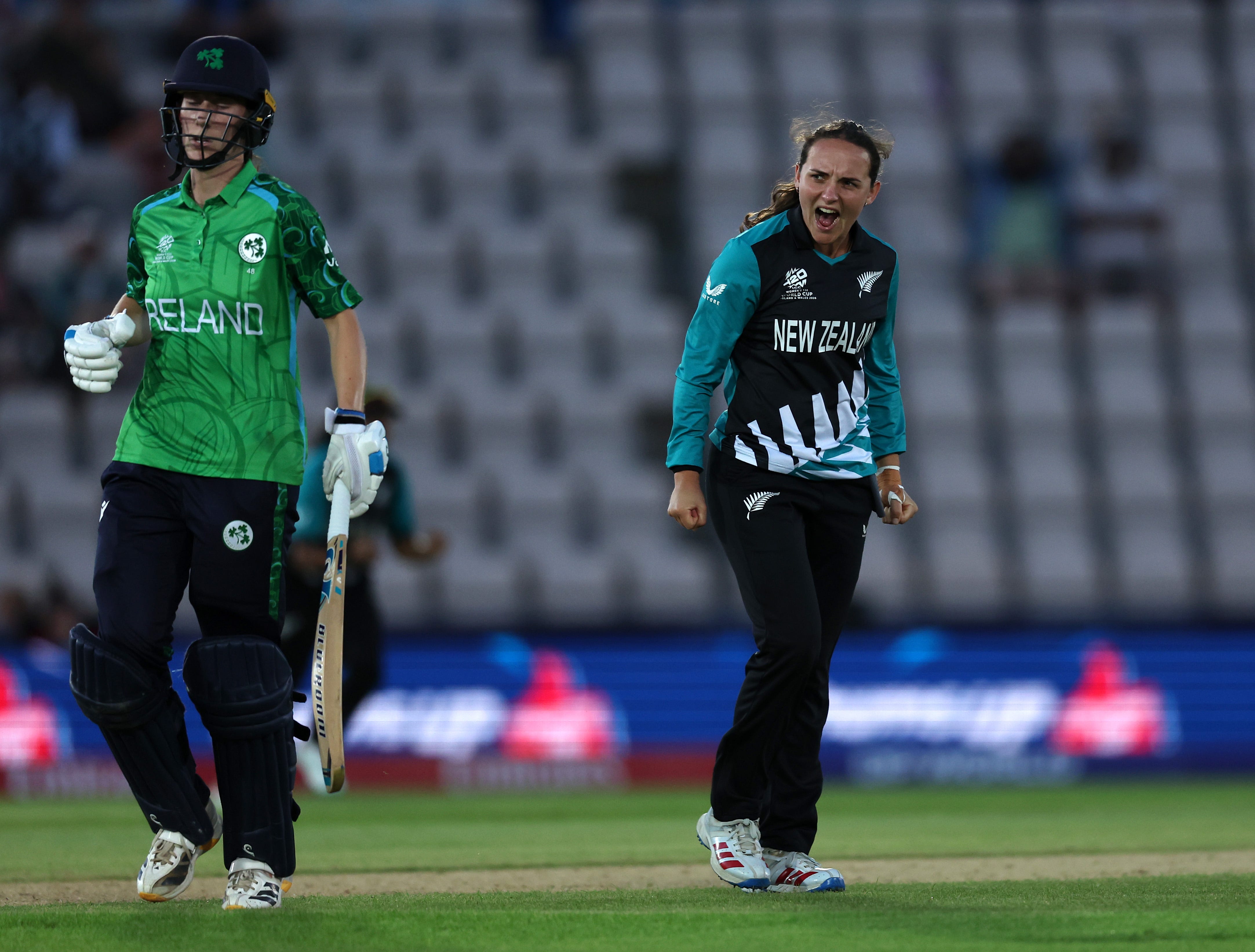
Never interrupt your enemy when he is making a mistake. Napoleon came up with that one, apparently.
For 37 of the 40 overs of Ireland’s contest with New Zealand, they lived by this maxim. The defending champions, fighting for their tournament lives amidst a desperate opening to the competition, continued to offer up gift after gift.
In the first innings, the Black Ferns threw wickets away. In the second, they offered Gaby Lewis and Orla Prendergast boundary balls aplenty.
Then came the 18th over bowled by Amelia Kerr. Suddenly, New Zealand stopped making mistakes. Ireland couldn’t wait on victory to be handed to them. They had to reach out and grab it. In so doing, they made errors of their own.
In such a tight contest, whoever made the last mistake was always going to lose. Ireland made fewer mistakes on Friday night. Unfortunately for them, they made the last ones. While playing the vastly superior cricket, they never got definitively ahead of the game. It cost them a historic victory.
It all started so well. The New Zealand top order decided to either try ramp or walk down the track at Prendergast bowling in rhythm and with pace. She castled timber. Twice.
Kerr, after fighting back with a series of boundaries, picked out the bigger square boundary. A slog sweep was snaffled by Louise Little, one of two wickets for leggie Cara Murray.
After criticism of bowling plans and fields against Scotland, Ireland kept things significantly more simple this time around. For most of the innings, cover was inside the circle. Have the spinners bowl slow and straight to a batting line-up under pressure mid-collapse. More often than not, they won’t be good enough to open up the off side. Wait for the mistake.
While Ireland may have been frustrated to be chasing 140 after Bates hit 14 off Prendergast’s final over, they still had the better of the first half. There were drops and mis-fields, but not to the game-changing extent we’ve seen with this team.
With the bat, Ireland’s plan clearly was to take things deep. Lewis brought up her first T20 World Cup 50 off 46 balls. Prendergast brought up her second T20 World Cup 50 off 45 balls. Measured. Boundaries at the right time. Never a flurry.
Traditional thinking dictates that, when a big partnership ensues, one batter plays the aggressor, the other plays the anchor. Neither Irish player got out of third gear.
For a while, it looked to be with good reason. Whenever a few dot balls built, New Zealand released the pressure. How many of Ireland’s boundaries were pulling leg side deliveries over short fine? Easy pickings.
Don’t interrupt them.
There were some exceptions. Lewis played a gorgeous check drive over mid off. Prendergast used her feet to carve through extra cover. But these moments of initiative were few and far between, Ireland instead largely surviving on Kiwi gifts.
Make no mistake, Ireland batted beautifully. Prendergast’s pull over the leg side for the only maximum of the innings was a brutal reminder of her power. It’s hard to quibble with a century partnership in a T20.
The hard truth, though, is that Ireland lost by four runs with six wickets in hand. That is not a well managed chase. Easy to say in hindsight, but one of the set batters needed to take risks at an earlier juncture. Not when 29 were required off three overs with New Zealand’s captain holding the ball.
Kerr could have held herself back for the critical final over. She didn’t. She took the aggressive option and looked to heap pressure back on Ireland. Prendergast tried to take her over long-on, the bat turning in her hand. Georgia Plimmer made a mess of fielding but Jess Kerr, running around from long-off, backed her up and pulled off a boundary save.
One ball later, Prendergast offered a catch to long-on. Plimmer made a meal of getting to it but, crucially, managed to get the ball to hit her body instead of skipping past to the rope.
New Zealand were bending but, at just the right juncture, they stopped breaking. In two balls, four runs were saved in the field. Guess how many Ireland lost by.
On the next delivery, Prendergast went square instead of straight, picking out deep mid-wicket. Seven deliveries later, Lewis departed trying to cart a slower ball over the off-side. Suddenly Ireland needed 15 off the last over with Leah Paul on strike. Louise Little, who hit Lauren Bell for 17 in an over against England, was stood at the non-striker’s end.
After 37 overs of cashing in on Kiwi errors, now Ireland were now the ones floundering. Had they made an effort to get in front of the game, as Kerr did with the decision to bowl herself, the late momentum shift wouldn’t have mattered.
This was Ireland’s best performance of the World Cup and should be a day filled with positives. That makes it the most difficult of the three defeats to take.
For most of the contest, Ireland wisely avoided interrupting New Zealand. The problem was, that with game still undecided in the dying stages, they swapped places. Ireland interrupted Kiwi implosion with faults of their own.
The Black Ferns blinked more often, but Ireland blinked last.
Taking the game deep, is an oft used mantra, but the question is when have you gone deep enough and it is time to go high risk.
To make my usual analogy to the men’s game, I recall an Ireland vs New Zealand ODI when Ireland were chasing a 300+ total, both Stirling and Tector got to their 100’s but were behind the rate, they both got out and the commentators saying that they should have taken it deeper before trying to stop the increase of the required run rate.
Now both Predregast and Lewis have lots of experience, so if anyone in the team would know when to hit the “go” button, it should be them
Bilaterals are great but to use a word I have stolen from the Irish Cricket Podcast, they lack the jeopardy of knock out cricket. Still have memories of the implosion against Scotland in the previous qualifiers and in the qualifiers earlier this year when Ireland entering the tournament as the top ranked team they faced a genuine possibility of not finishing in the top 4
I will be attending the next match bs Sri Lanka, would not be surprised if Ireland win, but it will bring again the question of having the experience of winning matches when the result really matters