
Do Ireland know their best team?
The Irish middle order remains a work in progress but they are running out of matches to fix it ahead of February's World Cup

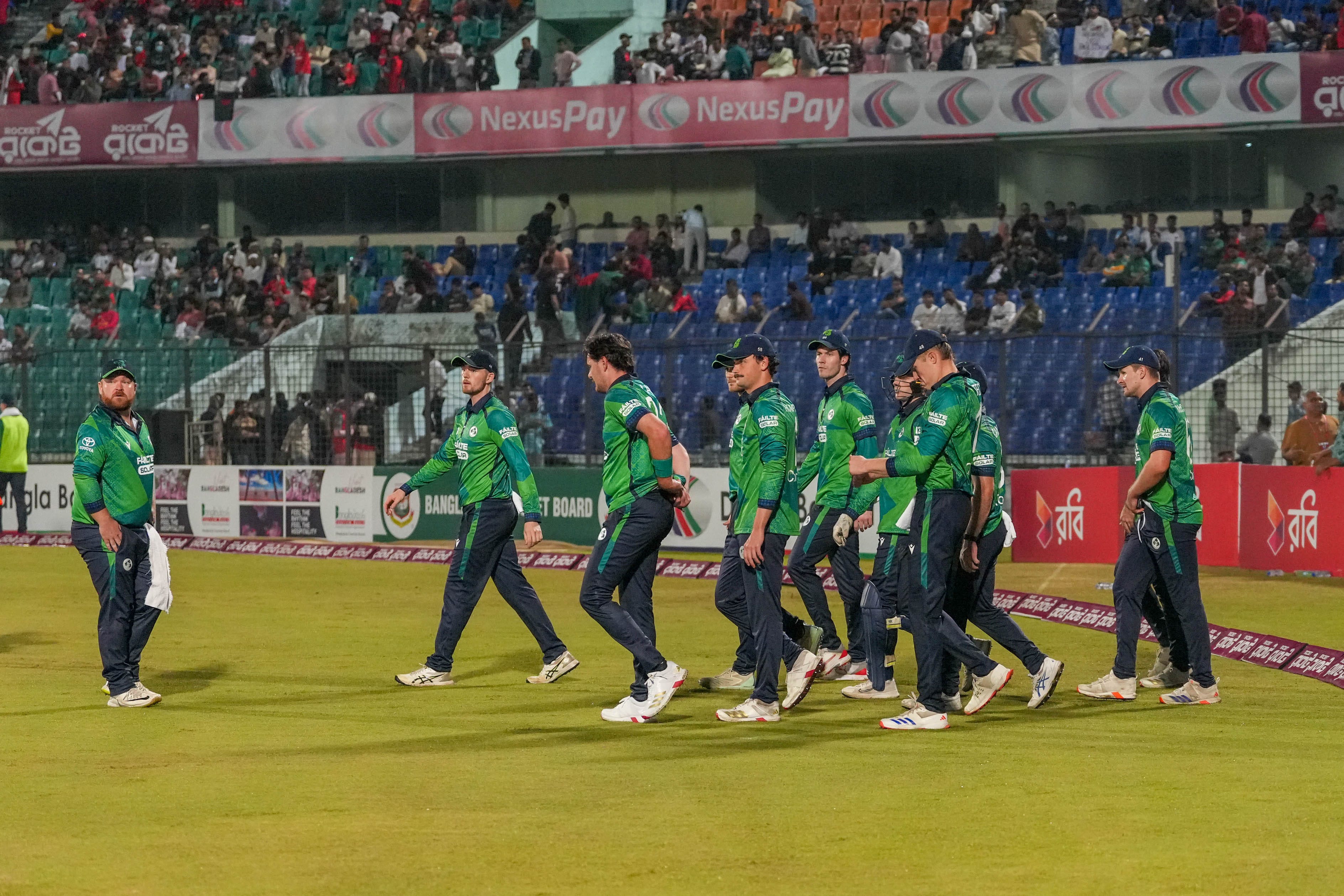
Plenty has gone right for Ireland in this T20 series. Clearly, given the nature of Thursday’s resounding victory and the narrow margin of Saturday’s series-levelling defeat.
The opening partnership of Paul Stirling and Tim Tector has fired to the tune of 97 runs off 45 deliveries across the two games. Saturday saw Harry Tector put in another strong showing at number three, Matthew Humphreys show off his new ball ability and Mark Adair return to fitness with an impressive display. Game two featured Gareth Delany bowling well with a wet ball in dewy conditions. Barry McCarthy has been quietly excellent.
Despite individual components firing well, there is still an unavoidable sense of wanting more from the collective. Predominantly from the batting line-up.
The middle order remains a work in progress, Ireland’s historical struggles from overs 6-15 returning to bite them during the recent loss. A number of players are out of form. Inexperienced youngsters crave game time to learn on the international job. Older heads require the same to rediscover their groove.
Without players showing the required form to make selection a formality, Ireland find themselves in something of a quandary. With a handful of games remaining before the World Cup, they still don’t know their best team.
During Saturday’s powerplay, Ireland scored 75 runs for the loss of one wicket at a run rate of 12.5. It was a phenomenal return, Stirling and Tector combining beautifully once again after Thursday’s impressive start.
From overs 7-15, though, they scored at 5.9 an over. Ireland to tend to be happy cruising in third gear during this period, setting up the game for a flurry at the death. But the idea isn’t to sink to below a run-a-ball.
Harry Tector scored 11 off 11 balls. Ben Calitz was 7 off 9. George Dockrell 18 off 21. Lorcan Tucker started sluggishly but caught up to reach 41 off 32. If, from numbers 3 onwards, your best individual strike-rate is 128, you’re in trouble. If it wasn’t for the fast start achieved from the openers, an already below par total of 170 would never have been achievable.
The conditions do provide context. After their seamers struggled again in the powerplay, Bangladesh’s spinners were excellent. Mahedi Hasan, master of an off-spinning craft which tends to no longer be in vogue in the shortest format, thought his way through a fantastic spell, dismissing two right-handers in the Tector brothers before cashing in on his favoured match-up vs the leftie Calitz.
When the seamers returned after the powerplay, they bowled into the pitch, often utilising cutters as the ball got softer. Ireland couldn’t play their favoured shots down the ground or over cow-corner. It was hard to play cross-bat shots square of the wicket on this surface.
All of which contributed to an iffy middle-overs display. With a World Cup in Asia approaching, Ireland can expect to see plenty of spin and pace-off from seamers on wickets which may well suit bowling short rather than full. How to set up the team to counteract?
Thursday was Ireland’s ideal batting blueprint. The openers got off to a flyer before one of the top three kicked on. Harry Tector did the job on the day, ending up unbeaten on 69. As a general rule of thumb, the longer Tector bats the better for Ireland. He’s not as adept as a Dockrell or Adair at clearing the ropes from ball one, but if he’s set, he’s as good a late-overs power hitter as anyone on this team.
Everyone else batted around Tector, to an extent. Contributions were made (Tucker 18, Campher 24, Dockrell 12*) without anyone offering significant help. If Dockrell or Tucker came good with another 20 runs, building on the top order excellence to take Ireland above 200, then we’re looking at the best case scenario.
Of course, that won’t happen every time. As we saw Saturday. Tim Tector and Stirling got Ireland off to arguably a better start, but no one in the top three passed 40. The middle order needed to pick up the slack against a difficult attack.
Calitz has been identified as a much-needed left-handed spin-thumper. He has a good slog sweep but, granted after only two international games, it risks becoming a default which doesn’t always bring the desired result. His one boundary came when keeping his shape and going over cover, the leg side game looking off-kilter and ultimately causing his downfall.
At this stage, the world knows Dockrell’s favoured plan is to hit down the ground. Against pace rather than spin. His career strike rate is 133 against quicker bowling, dropping to 123 off the slow stuff. Bangladesh threw spin at him and seamers who wouldn’t pitch one in his half. Gareth Delany tried to rescue things - akin to his display against England in September. One six off Mustafizur was accompanied by a series of dot balls as short cutters were fired in away from his hitting arc.
There remain plenty of unknowns with this batting line-up. Does Tim Tector’s ability to hit both pace and spin in the powerplay lead to a discussion about Ross Adair’s return from injury? Tector’s best shot this week was mullering a length ball over mid-wicket, barely looking up to admire the damage as he took comfort in the sound off the bat. We may well look back on that pull shot as a career-defining stroke.
Ireland remain confident in Adair’s own abilities. How could they not, given he hasn’t actually played that much since his South Africa 100 over 12 months ago? Tector has looked very comfortable without putting in his own dominant score. Is there a way of fitting both into the side?
Lest we forget Adair was slated to bat as a finisher last year, only for a blow to the helmet of Tucker in the Abu Dhabi nets to leave a hole atop the order. With those at five and six struggling for form, does Adair return in his originally-destined middle-order role?
Where that leaves the rest is fascinating. If Calitz is the best option to counteract spin, he needed as much game time as possible. Time to figure it out at the top level, leaving him well-placed ahead of February’s trip to Colombo. Stirling didn’t pick him for game one, instead calling his name 48 hours later when Campher pulled up stiff.
Whatever Ireland decide, they’re not in an ideal position. If Adair returns in January, either atop the order or in a finishing role, he will be short of games. The England series suggested that he needs time to acclimatise. He is still inexperienced at this level.
If faith remains in Dockrell, he needs game time to find form once his downtown power is taken out of the game. He has in the past shown an ability to hit square. What about Campher, given his strength against spin, not to mention an ability to offer useful overs with the ball? Ireland survived with just five bowlers on Saturday, but Josh Little’s struggles plus the volatility of bowling spin in the dew means you need six, if not seven bowlers.
Such selection quandaries are not uncommon. T20 is a volatile format, the hardest of them all to find multiple players in form at the same time. Still, some of these questions should really have been answered by now. Ireland have Tuesday’s series finale, two games against the UAE and possibly more (at least an official warm-up or two) before a World Cup-opener against Sri Lanka on February 8th. Being optimistic, they have five or six games to figure it out.
It’s not inconceivable that someone fires to put one or two questions to bed. Given the vagaries of T20 cricket, though, you really need a bigger sample size to figure out what’s real and what’s a solitary day out.
Stirling, Harry Tector and Tucker are probably the only batters guaranteed of making an Ireland XI on any given day. Campher isn’t far off. Competition for places is good - a la Tim Tector vs Adair - but the remaining uncertainty is due to players not making spots their own, as opposed to multiple options putting each other under pressure.
This isn’t quite cause for panic. There is time, just not lots of it. At some point, we will stop lamenting a lack of cricket, but given the evidence of the last two games, the point must be made once more: Ireland’s empty summer dance card could well come back to bite them.